Mythologies

Roland Barthes (1975)

Mythologies illustrates the beautiful generosity of Barthes’s progressive interest in the meaning (his word is signification) of practically everything around him, not only the books and paintings of high art, but also the slogans, trivia, toys, food, and popular rituals (cruises, striptease, eating, wrestling matches) of contemporary life . . . For Barthes, words and objects have in common the organized capacity to say something; at the same time, since they are signs, words and objects have the bad faith always to appear natural to their consumer, as if what they say is eternal, true, necessary, instead of arbitrary, made, contingent. Each of the little essays in this book wrenches a definition out of a common but constructed object, making the object speak its hidden, but ever-so-present, reservoir of manufactured sense.
Posted in culture, language, semiotics, theory

Illuminations

Walter Benjamin (1969)

Studies on contemporary art and culture by one of the most original, critical and analytical minds of this century. Illuminations includes Benjamin’s views on Kafka, with whom he felt the closest personal affinity, his studies on Baudelaire and Proust (both of whom he translated), his essays on Leskov and on Brecht’s Epic Theater. Also included are his penetrating study on “The Work of Art in the Age of Mechanical Reproduction,” an illuminating discussion of translation as a literary mode, and his thesis on the philosophy of history. Hannah Arendt selected the essays for this volume and prefaces them with a substantial, admirably informed introduction that presents Benjamin’s personality and intellectual development, as well as his work and his life in dark times.

Posted in art, culture, history, language, media, philosophy, photography

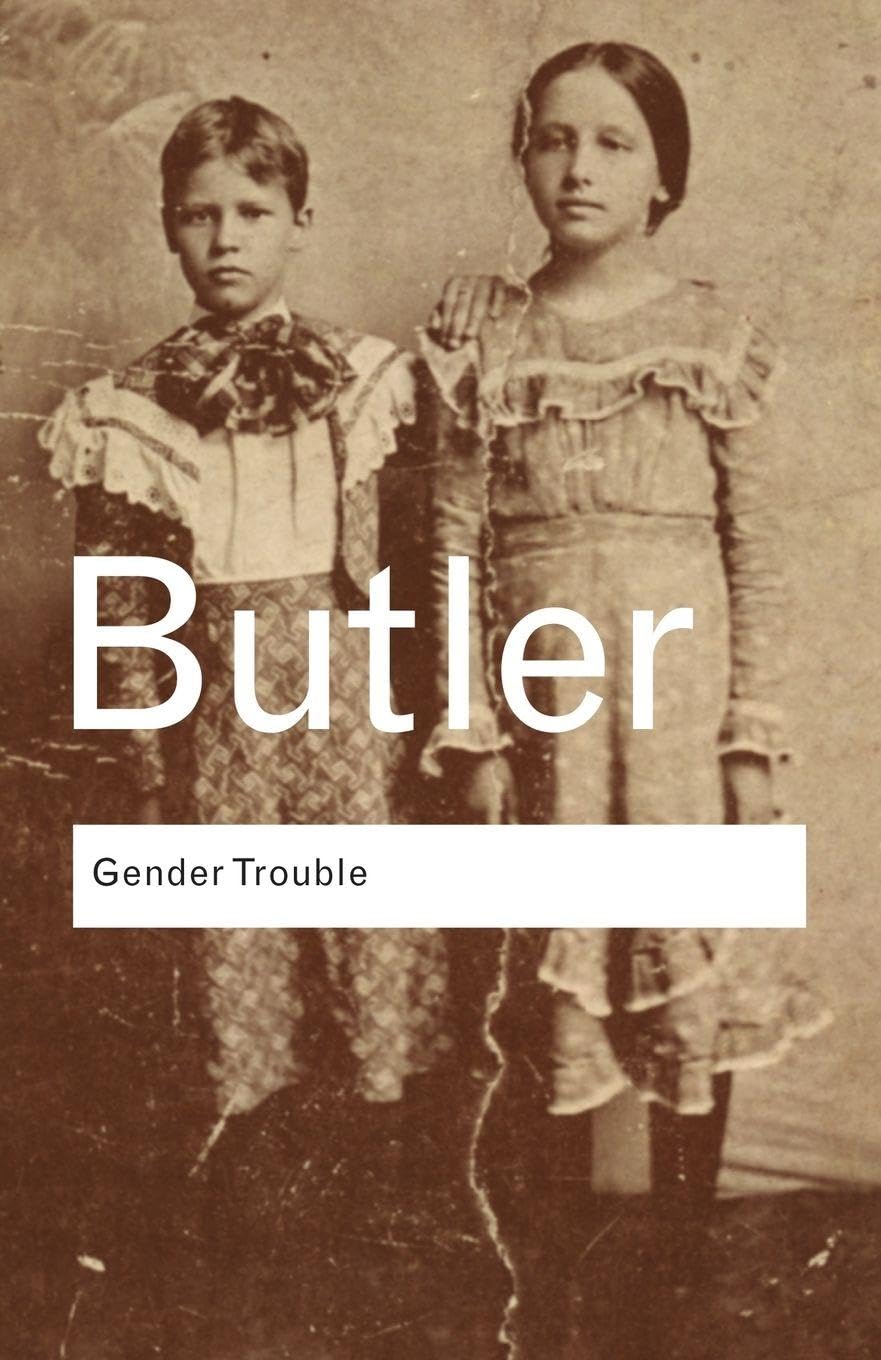
Gender Trouble: Feminism and the Subversion of Identity

Judith Butler (1989)

In a new introduction to the 10th-anniversary edition of Gender Trouble–among the two or three most influential books (and by far the most popular) in the field of gender studies–Judith Butler explains the complicated critical response to her groundbreaking arguments and the ways her ideas have evolved as a result. Nevertheless, she has resisted the urge to revise what has become a feminist classic (as well as an elegant defense of drag, given Butler’s emphasis on the performative nature of gender). The book was produced, according to Butler, “as part of the cultural life of a collective struggle that has had, and will continue to have, some success in increasing the possibilities for a livable life for those who live, or try to live, on the sexual margins.” An attack on the essentialism of French feminist theory and its basis in structuralist anthropology, Gender Trouble expands to address the cultural prejudices at play in genetic studies of sex determination, as well as the uses of gender parody, and also provides a critical genealogy of the naturalization of sex.

Posted in culture, theory

The Ruin of Representation in Modernist Art and Texts

Jo Anna Isaak (1986)

An investigation of the relationship of painting and literature, and the emergence of abstraction in art and writing, discussing figures such as James Joyce, Picasso, Gertrude Stein, and Wyndham Lewis.

Posted in art, history, language, poetry, theory

The Subcultures Reader

Edited by Ken Gelder and Sarah Thornton (1997)

First coined in the 1940s, the term “subculture” has been applied to society’s most interesting, and, often, most inventive elements. Through a collection of articles written over the last 50 years, this book traces both the history of the academic study of subcultures and the history of subcultures themselves. While you’ll find the usual assortment of articles on punk rock, street gangs, and Star Trek fans, what is perhaps most interesting are the articles from the early days of “subculture studies.” Two of the highlights include a piece by Paul G. Cressey on 1930s taxi dancers and their opinions on race and class, and an article by Howard Becker on the language and attitudes of jazz musicians in the early ’60s. The 55 selections in this volume offer a rich spectrum of subcultures and the academic responses they have evoked.

Posted in history, theory

Image, Music, Text

Roland Barthes (1978)

Roland Barthes, the French critic and semiotician, was one of the most important critics and essayists of this century. His work continues to influence contemporary literary theory and cultural studies. Image-Music-Text collects Barthes’s best writings on photography and the cinema, as well as fascinating articles on the relationship between images and sound. Two of Barthes’s most important essays, “Introduction to the Structural Analysis of Narrative” and “The Death of the Author” are also included in this fine anthology, an excellent introduction to his thought.

Posted in art, culture, language, media, photography, semiotics, theory

The Anti-Aesthetic: Essays on Postmodern Culture

Edited by Hal Foster (1993)

A handsome new edition of the seminal collection of late-twentieth-century cultural criticism. Named a Best Book of the Year by the Village Voice and considered a bible of contemporary cultural criticism, The Anti-Aesthetic is reissued now in a handsome new paperback edition. For the past twenty years, Hal Foster has pushed the boundaries of cultural criticism, establishing a vantage point from which the seemingly disparate agendas of artists, patrons, and critics have a telling coherence. In The Anti-Aesthetic, preeminent critics such as Jean Baudrillard, Rosalind Krauss, Fredric Jameson, and Edward Said consider the full range of postmodern cultural production, from the writing of John Cage, to Cindy Sherman’s film stills, to Barbara Kruger’s collages. With a redesigned cover and a new afterword that situates the book in relation to contemporary criticism, The Anti-Aesthetic provides a strong introduction for newcomers and a point of reference for those already engaged in discussions of postmodern art, culture, and criticism.

Posted in art, culture, theory

Digital Mantras: The Language of Abstract and Virtual Worlds

Steven Holtzman (1995)

Holtzman, who holds a doctorate in computer science, provides a highly stimulating discussion of the integration of music, art, and language with recent trends in computer technology. He traces the evolution of formal abstract structures as they exist in the music of Schoenberg and Boulez, the art of Kandinsky, and the language grammars of Chomsky. Since computers have the capability to manipulate structures, the author contends that we have reached new frontiers of unexplored artistic creativity; he foresees new worlds of creative expression-that is, “virtual worlds.” This text wisely addresses the issues of dissonance in electronic music and human emotion and understanding in the creative process. Holtzman’s journey into “virtual reality,” sprinkled with a touch of Indian mysticism, is a totally intelligible, enjoyable venture.

Posted in art, history, language, media, music, philosophy, science, technology

Mr. Wilson’s Cabinet Of Wonder: Pronged Ants, Horned Humans, Mice on Toast, and Other Marvels of Jurassic Technology

Lawrence Weschler (1995)

In the non-Aristotelian, non-Euclidean, non-Newtonian space between the walls of the Museum of Jurassic Technology in Los Angeles exist bats that can fly through lead barriers, spore-ingesting pronged ants, elaborate theories of memory, and a host of other off-kilter scientific oddities that challenge the traditional notions of truth and fiction. Lawrence Weschler’s book, expanded from an article for Harper’s, is, at turns, a tour of the museum, a profile of its founder and curator, David Wilson, and a meditation on the role of imagination and authority in all museums, in science and in life. Mr. Wilson’s Cabinet of Wonder is an exquisite piece of “magic realist nonfiction” that will prove utterly captivating.

Posted in art, biography, consciousness, exhibition, philosophy, science

Forest Of Signs: Art in the Crisis of Representation

Ann Goldstein, Mary Jane Jacob, Anne Rorimer, Howard Singerman, and Richard Koshalek (1989)

The thread of representation ties together the work of the 30 artists included in the book, encompassing such issues as allegory, appropriation, and commodification, the role of the artist, and the functions of authorship and originality in vesting meaning in art. Much of the work is provocative, challenging the way we look at art, the way we talk about it, where we see it, and how we buy it.

Posted in art, culture, exhibition, history, language, photography, semiotics, theory