The Power of Myth

Joseph Campbell and Bill Moyers (1988)

Among his many gifts, Joseph Campbell’s most impressive was the unique ability to take a contemporary situation, such as the murder and funeral of President John F. Kennedy, and help us understand its impact in the context of ancient mythology. Herein lies the power of The Power of Myth, showing how humans are apt to create and live out the themes of mythology. Based on a six-part PBS television series hosted by Bill Moyers, this classic is especially compelling because of its engaging question-and-answer format, creating an easy, conversational approach to complicated and esoteric topics. For example, when discussing the mythology of heroes, Campbell and Moyers smoothly segue from the Sumerian sky goddess Inanna to Star Wars’ mercenary-turned-hero, Han Solo. Most impressive is Campbell’s encyclopedic knowledge of myths, demonstrated in his ability to recall the details and archetypes of almost any story, from any point and history, and translate it into a lesson for spiritual living in the here and now.

Posted in culture, history, interview, myth

Lipstick Traces: A Secret History of the 20th Century

Greil Marcus (1989)

Acclaimed rock reviewer/author Marcus offers up a fascinating thesis: that modern consciousness is to a great extent shaped by events or documents “insignificant” of themselves but collectively very important indeed, perhaps even definitive. While spending much of its time on the impact of the Sex Pistols, this is not purely a “rock-music” book–along the way one encounters various ranters, Dadaists, nihilists, whatever–even Theodore Dreiser. If it lacks the rigor demanded of academic historiography, Marcus’s book is still great popular culture, and academic historians would do well to be interested. Meanwhile, the cross-referential treatment gives a seeming (at least) validity that sheer facts wouldn’t to the idea of a “secret history” that permeates unobtrusively and yields more meaning than many would like to believe.

Posted in art, culture, history, music, situationist, theory

The Birth of Bebop

Scott DeVeaux (1997)

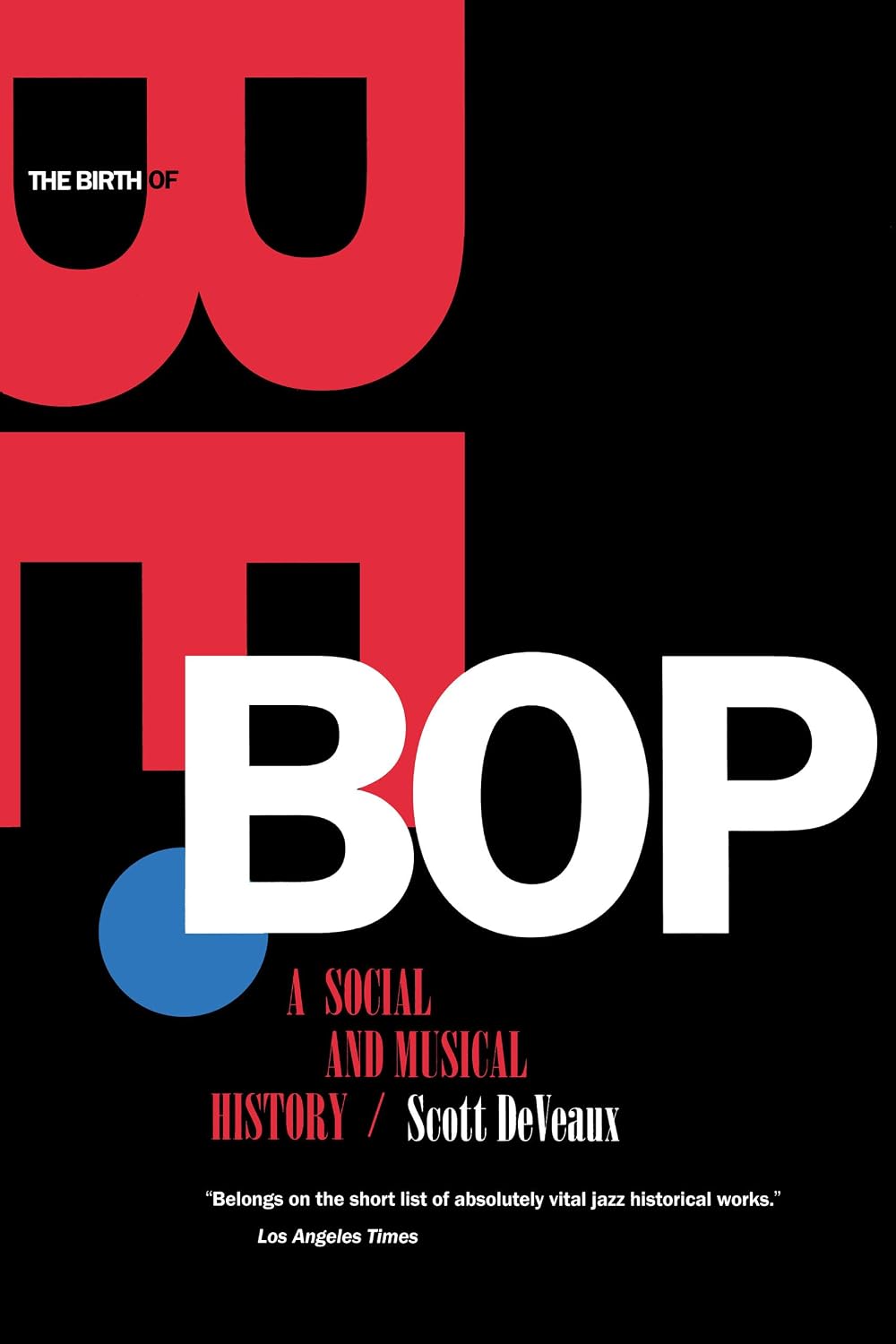
According to Scott DeVeaux, who has been called the Bud Powell of jazz historians, no single, completely inclusive definition of jazz exists; all that remains to define it is its vigorous evolution. Accordingly, jazz historians are “obsessed with continuity and consensus, even–perhaps especially– when the historical record suggests disruption and dissent.” Bebop, such a self-effacing, clownish term that in no way suggests the complexities of its sounds and rhythms, would become synonymous with a whole new musical sensibility, thought by some to herald nothing less than a revolution. DeVeaux succumbs neither to the evolution nor revolution analysis, but creates an intricate historical weave that sets bebop in the broader social and political contexts.

Posted in culture, history, music

Apocalypse Culture

Edited by Adam Parfrey (1987)

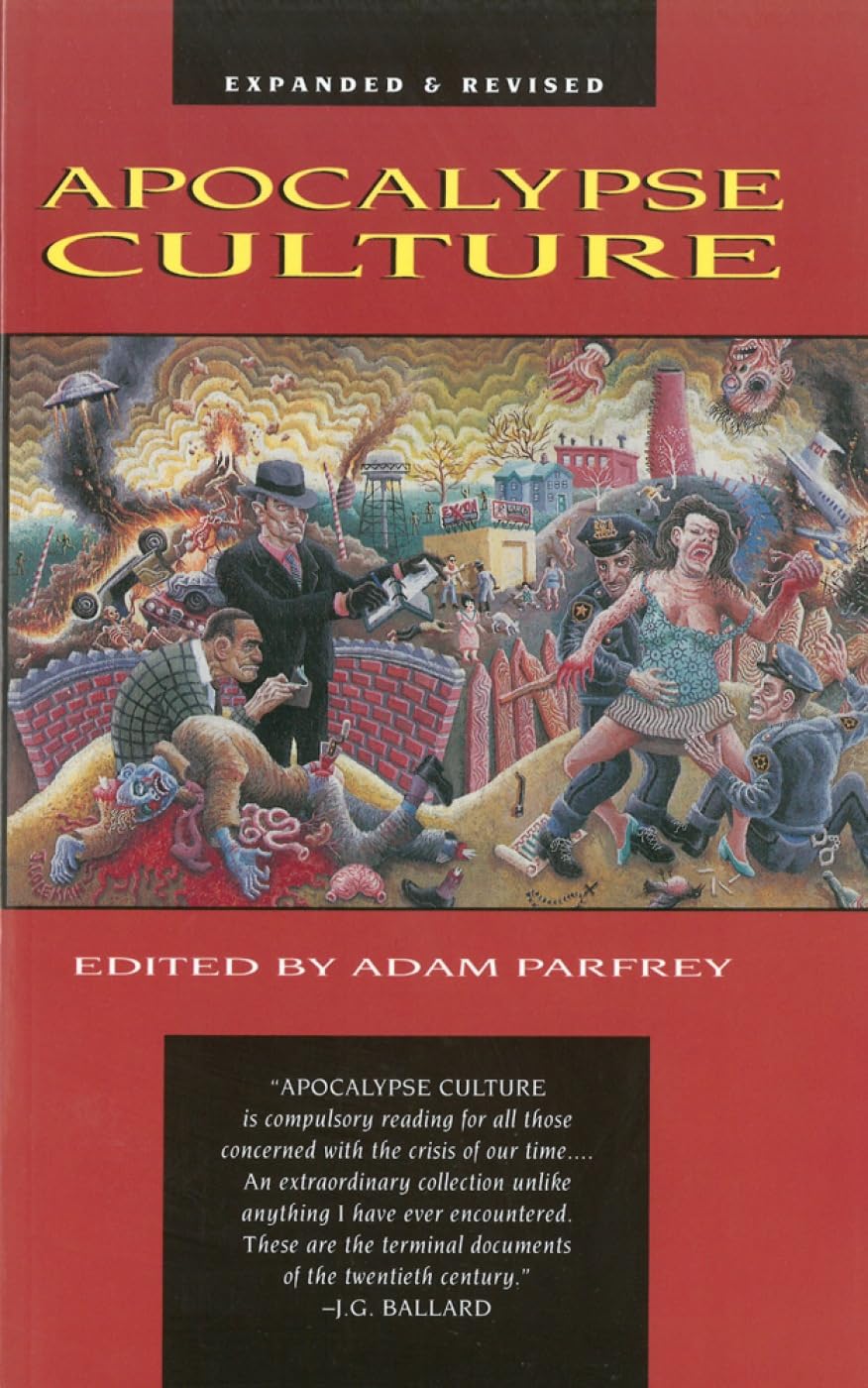
“Apocalypse Culture is compulsory reading for all those concerned with the crisis of our times. An extraordinary collection unlike anything I have ever encountered. These are the terminal documents of the twentieth century.” -J.G. Ballard

Posted in culture, myth, philosophy

The Chalice and the Blade

Riane Eisler (1994)

Women played leading roles in the first Christian communities; Jesus’ teachings had a feminist bent; ancient Hebrews worshipped the prehistoric goddess-mother well into monarchic times; and Nazis, with their system of male dominance, were a direct throwback to the Indo-European or Aryan invaders whom they crudely imitated. These controversial ideas and findings suggest the thrust of Eisler’s highly readable synthesis. She convincingly documents the global shift from egalitarian to patriarchal societies, interweaving new archeological evidence and feminist scholarship. In her scenario, as women, once venerated, were degraded to pawns controlled by men, social cooperation gave way to reliance on violence, hierarchy and authoritarianism.

Posted in culture, history, theory

Sexual Politics

Edited by Amelia Jones (1996)

Completing a trilogy begun with Chicago’s Beyond the Flower and The Dinner Party, this volume is the actual catalog of the reappearance of Chicago’s peripatetic icon of feminist art. But “The Dinner Party” is only one of about 100 other feminist artworks, created by 55 women artists, that were put on display at the Armand Hammar Museum to bring 1970s feminist art into perspective.

Posted in art, exhibition, history, theory

Meditations On a Hobby Horse and Other Essays On the Theory of Art

E.H. Gombrich (1963)

Prompted by modern critical discussions, the fourteen papers, lectures and articles assembled in this volume revolve around issues raised by twentieth-century art and theory. Taking abstraction and expression as his main themes, Professor Gombrich’s essays encompass the whole of the history of art, and include major articles on the social history of art, visual metaphor, tradition and expression, and psychoanalysis.

Posted in art, culture, history, philosophy, science, theory

Art Subjects

Howard Singerman (1999)

Nearly every artist under the age of fifty in the United States today has a Master of Fine Arts degree. Howard Singerman’s thoughtful study is the first to place that degree in its proper historical framework and ideological context. Arguing that where artists are trained makes a difference in the forms and meanings they produce, he shows how the university, with its disciplined organization of knowledge and demand for language, played a critical role in the production of modernism in the visual arts. Now it is shaping what we call postmodernism: like postmodernist art, the graduate university stresses theory and research over manual skills and traditional techniques of representation.

Singerman, who holds an M.F.A. in sculpture as well as a Ph.D. in Visual and Cultural Studies, is interested in the question of the artist as a “professional” and what that word means for and about the fashioning of artists. He begins by examining the first campus-based art schools in the 1870s and goes on to consider the structuring role of women art educators and women students; the shift from the “fine arts” to the “visual arts”; the fundamental grammar of art laid down in the schoolroom; and the development of professional art training in the American university. Singerman’s book reveals the ways we have conceived of art in the past hundred years and have institutionalized that conception as atelier activity, as craft, and finally as theory and performance.

Posted in art, culture, education, feedback, history, theory

Overlay

Lucy Lippard (1983)

Overlay is Lucy Lippard’s classic book on contemporary art and its connection to prehistoric sites and symbols. Viewed by critics, artists, art historians, and students as the essential text on how prehistoric images have been “overlayed” onto contemporary art by today’s artists, Overlay is for anyone interested in the possibility of reintegrating art into the fabric of society as a whole, as in prehistoric times.

Posted in art, culture, history, theory

Imagining Language

Edited by Jed Rasula and Steve McCaffery (1998)

When works such as Finnegans Wake and Tender Buttons were first introduced, they went so far beyond prevailing linguistic standards that they were widely considered “unreadable,” if not scandalous. Jed Rasula and Steve McCaffery take these and other examples of twentieth-century avant-garde writing as the starting point for a collection of writings that demonstrates a continuum of creative conjecture on language from antiquity to the present. The result is more laboratory than inventory. The anthology, which spans three millennia, generally bypasses chronology in order to illuminate unexpected congruities between seemingly discordant materials. Thus the juxtaposition of Marcel Duchamp and Jonathan Swift, of Victor Hugo and Easter Island “rongo rongo.”

Posted in art, language, poetry, theory