
Category Archives: history
A Natural History of the Senses
 Diane Ackerman (1990)
An exciting multidiscipline book that crosses the lines of literature, history, anthropology, music, psychology, sociology, and philosophy and that flows with grace and reason. The theme is expressed in such a way as to draw readers into experiential thought and, therefore, impacts heavily upon the way one looks at the issue of sensing and its role for humanity. It is sure to raise readers’ consciousness level while providing researched and analyzed information on this topic. In addition, the language is clear and concise, which makes the book valuable to a large cross section of readers. The generous use of cultural and historical examples adds to the readability.
Posted in consciousness, history, language, music, philosophy, science
A Pictorial History of Psychology
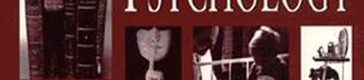 Edited by Wolfgang G. Bringmann (1997)
Compendium of 107 historical essays and illustrations. Expanded version of a translated German title (1993). Includes 50 new English language essays.
Posted in consciousness, history, psychology, science
Illuminations
 Walter Benjamin (1969)
Studies on contemporary art and culture by one of the most original, critical and analytical minds of this century. Illuminations includes Benjamin’s views on Kafka, with whom he felt the closest personal affinity, his studies on Baudelaire and Proust (both of whom he translated), his essays on Leskov and on Brecht’s Epic Theater. Also included are his penetrating study on “The Work of Art in the Age of Mechanical Reproduction,” an illuminating discussion of translation as a literary mode, and his thesis on the philosophy of history. Hannah Arendt selected the essays for this volume and prefaces them with a substantial, admirably informed introduction that presents Benjamin’s personality and intellectual development, as well as his work and his life in dark times.
Posted in art, culture, history, language, media, philosophy, photography
The Ruin of Representation in Modernist Art and Texts
 Jo Anna Isaak (1986)
An investigation of the relationship of painting and literature, and the emergence of abstraction in art and writing, discussing figures such as James Joyce, Picasso, Gertrude Stein, and Wyndham Lewis.
The Subcultures Reader
 Edited by Ken Gelder and Sarah Thornton (1997)
First coined in the 1940s, the term “subculture” has been applied to society’s most interesting, and, often, most inventive elements. Through a collection of articles written over the last 50 years, this book traces both the history of the academic study of subcultures and the history of subcultures themselves. While you’ll find the usual assortment of articles on punk rock, street gangs, and Star Trek fans, what is perhaps most interesting are the articles from the early days of “subculture studies.” Two of the highlights include a piece by Paul G. Cressey on 1930s taxi dancers and their opinions on race and class, and an article by Howard Becker on the language and attitudes of jazz musicians in the early ’60s. The 55 selections in this volume offer a rich spectrum of subcultures and the academic responses they have evoked.
Digital Mantras: The Language of Abstract and Virtual Worlds
 Steven Holtzman (1995)
Holtzman, who holds a doctorate in computer science, provides a highly stimulating discussion of the integration of music, art, and language with recent trends in computer technology. He traces the evolution of formal abstract structures as they exist in the music of Schoenberg and Boulez, the art of Kandinsky, and the language grammars of Chomsky. Since computers have the capability to manipulate structures, the author contends that we have reached new frontiers of unexplored artistic creativity; he foresees new worlds of creative expression-that is, “virtual worlds.” This text wisely addresses the issues of dissonance in electronic music and human emotion and understanding in the creative process. Holtzman’s journey into “virtual reality,” sprinkled with a touch of Indian mysticism, is a totally intelligible, enjoyable venture.
Posted in art, history, language, media, music, philosophy, science, technology
Forest Of Signs: Art in the Crisis of Representation
 Ann Goldstein, Mary Jane Jacob, Anne Rorimer, Howard Singerman, and Richard Koshalek (1989)
The thread of representation ties together the work of the 30 artists included in the book, encompassing such issues as allegory, appropriation, and commodification, the role of the artist, and the functions of authorship and originality in vesting meaning in art. Much of the work is provocative, challenging the way we look at art, the way we talk about it, where we see it, and how we buy it.
Posted in art, culture, exhibition, history, language, photography, semiotics, theory
Printmaking in America: Collaborative Prints and Presses, 1960-1990
 Edited by Trudy Hansen (1995)
Curators Hansen, Joann Moser, David Mickenberg, and Barry Walker chronicle the growth of American printmaking from early utilitarian works through the establishment of printmaking as a fine art. The work describes developments in technique but more importantly addresses the complex, cooperative process that was born in innovative printshops such as the Tamarind Lithography Workshop in Los Angeles. Mickenberg’s chapter on nonprofit and university-affiliated workshops provides refreshing insight into how the financial support of large foundations helped found the nonprofit printshops. Not only did such workshops pool the talents of printmakers, but they helped create new markets for what had previously been considered a dying art. The authors also attribute the rebirth of printmaking in the United States to several women and minority artists and printers; however, the most recognized prints, created by the likes of Andy Warhol and Roy Lichtenstein, have not been overlooked.
Posted in art, education, exhibition, history, printmaking
20th-Century Type Remix
 Lewis Blackwell (1999)
This book challenges the concept of how typographic communication works today, but in doing so strengthen its ties with the traditions of the past. An introductory essay shows how current creative trends are simply part of the continuum of change that can be plotted from the turn of the last century to the turn of the next. Strong illustrated intersection dividers, specially commissioned from leading designers, set the scene for each chapter, or decade, and the space devoted to the 1990s has been substantially expanded.
Posted in art, design, history, typography
Bauhaus, 1919-28
 Edited by Herbert Bayer, Walter Gropius, and Ise Gropius (1938)
Over seventy years after its foundation in Weimar, the Bauhaus has become a concept all over the world. The respect which it commands is associated above all with the design it pioneered, one which we now describe as “Bauhaus style”. The teachers at the Bauhaus included the leading artists of the times, among them Wassily Kandinsky, Lyonel Feininger, Paul Klee, and Oscar Schlemmer. The teaching strategies developed were adopted internationally into the curriculum of art and design institutes.
Posted in architecture, art, design, education, exhibition, history