
Category Archives: art
Printmaking in America: Collaborative Prints and Presses, 1960-1990
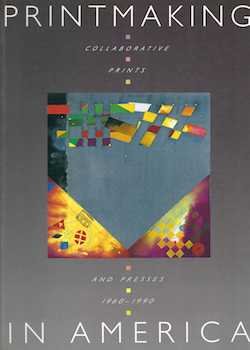 Edited by Trudy Hansen (1995)
Curators Hansen, Joann Moser, David Mickenberg, and Barry Walker chronicle the growth of American printmaking from early utilitarian works through the establishment of printmaking as a fine art. The work describes developments in technique but more importantly addresses the complex, cooperative process that was born in innovative printshops such as the Tamarind Lithography Workshop in Los Angeles. Mickenberg’s chapter on nonprofit and university-affiliated workshops provides refreshing insight into how the financial support of large foundations helped found the nonprofit printshops. Not only did such workshops pool the talents of printmakers, but they helped create new markets for what had previously been considered a dying art. The authors also attribute the rebirth of printmaking in the United States to several women and minority artists and printers; however, the most recognized prints, created by the likes of Andy Warhol and Roy Lichtenstein, have not been overlooked.
Posted in art, education, exhibition, history, printmaking
20th-Century Type Remix
 Lewis Blackwell (1999)
This book challenges the concept of how typographic communication works today, but in doing so strengthen its ties with the traditions of the past. An introductory essay shows how current creative trends are simply part of the continuum of change that can be plotted from the turn of the last century to the turn of the next. Strong illustrated intersection dividers, specially commissioned from leading designers, set the scene for each chapter, or decade, and the space devoted to the 1990s has been substantially expanded.
Posted in art, design, history, typography
Bauhaus, 1919-28
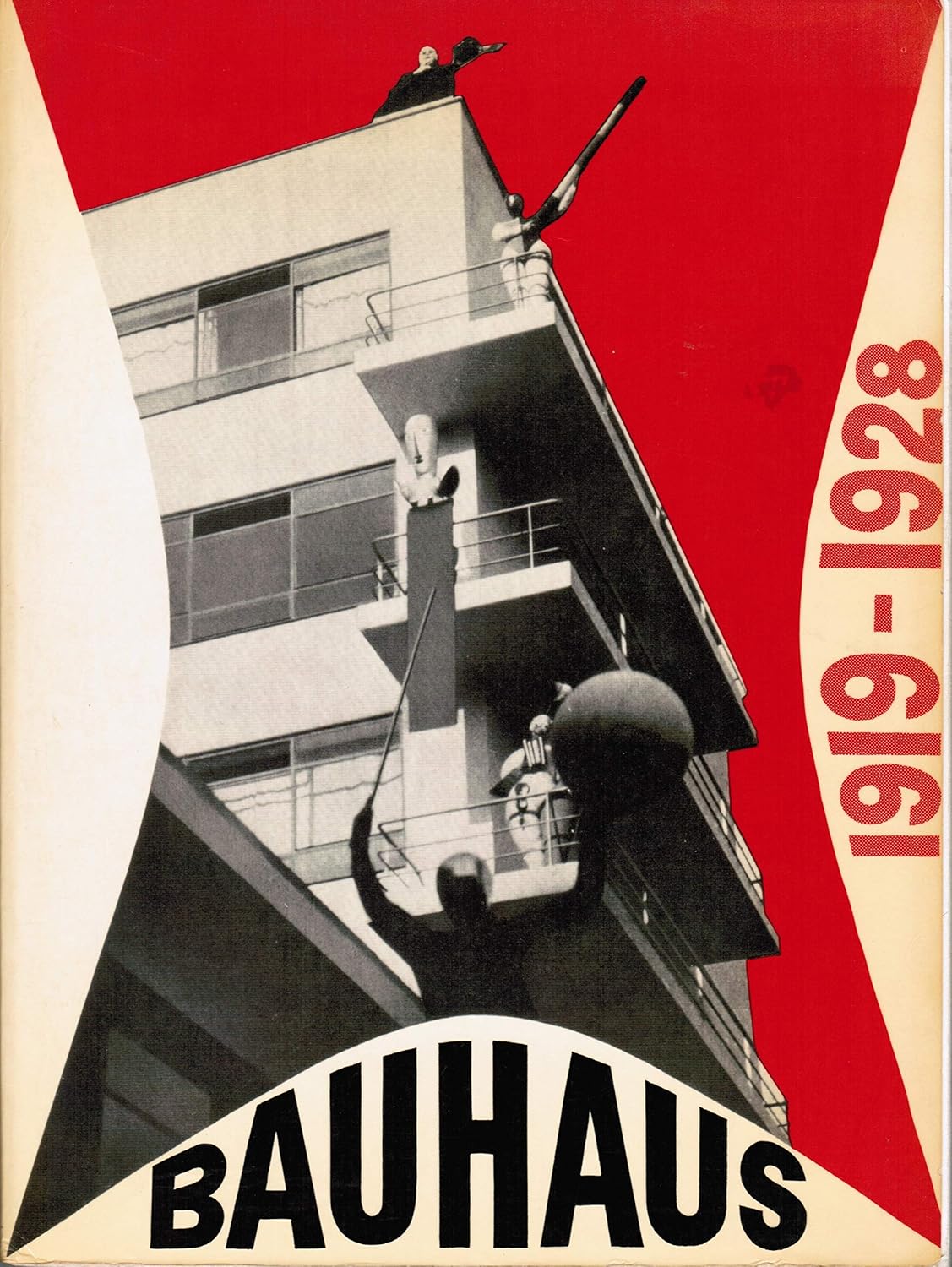 Edited by Herbert Bayer, Walter Gropius, and Ise Gropius (1938)
Over seventy years after its foundation in Weimar, the Bauhaus has become a concept all over the world. The respect which it commands is associated above all with the design it pioneered, one which we now describe as “Bauhaus style”. The teachers at the Bauhaus included the leading artists of the times, among them Wassily Kandinsky, Lyonel Feininger, Paul Klee, and Oscar Schlemmer. The teaching strategies developed were adopted internationally into the curriculum of art and design institutes.
Posted in architecture, art, design, education, exhibition, history
Remediation: Understanding New Media
 Jay David Bolter and Richard Grusin (2000)
Media critics remain captivated by the modernist myth of the new: they assume that digital technologies such as the World Wide Web, virtual reality, and computer graphics must divorce themselves from earlier media for a new set of aesthetic and cultural principles. In this richly illustrated study, Jay David Bolter and Richard Grusin offer a theory of mediation for our digital age that challenges this assumption. They argue that new visual media achieve their cultural significance precisely by paying homage to, rivaling, and refashioning such earlier media as perspective painting, photography, film, and television. They call this process of refashioning “remediation,” and they note that earlier media have also refashioned one another: photography remediated painting, film remediated stage production and photography, and television remediated film, vaudeville, and radio.
Posted in art, media, technology, theory
On the Passage of a Few People Through a Rather Brief Moment in Time
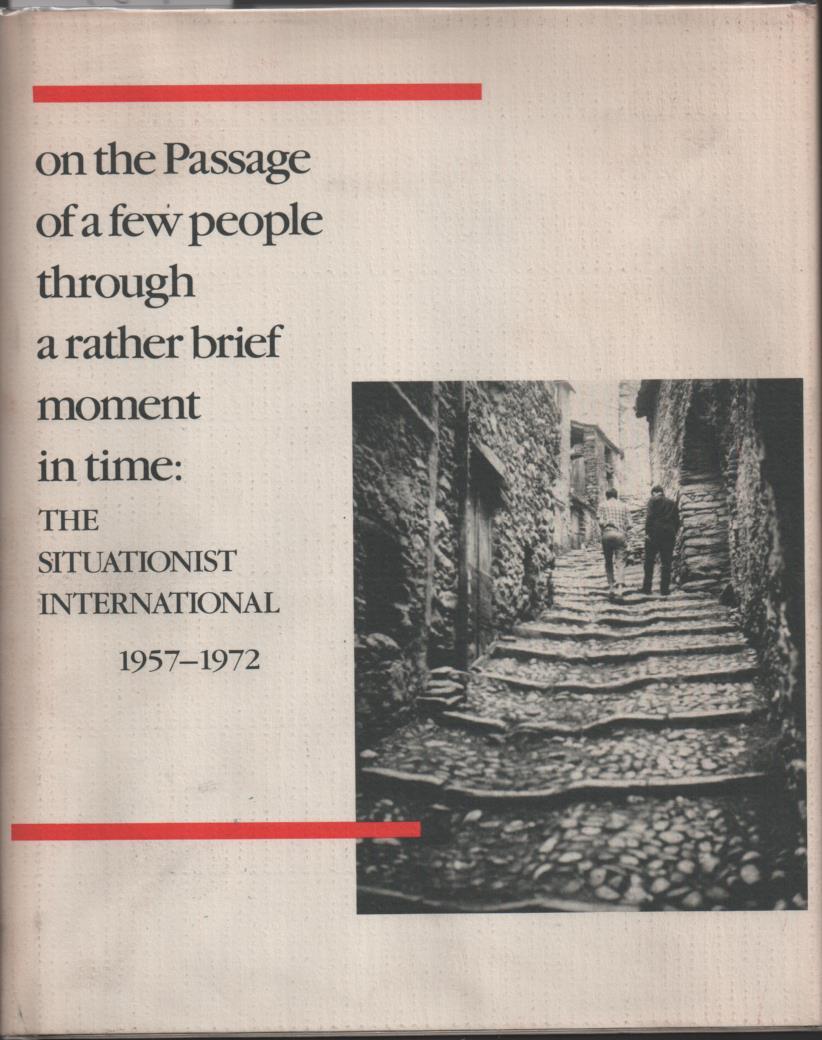 Edited by Elisabeth Sussman (1989)
These photographs, essays, drawings, and original texts document the rich agit-art legacy of the Situationist International, a group of European artists and writers who emerged from such avant-garde movements as COBRA, Lettrisme, and the Imaginary Bauhaus and from the breakup of surrealism to launch a strategy of art as cultural critique.
Posted in art, history, situationist, theory
Design Culture Now
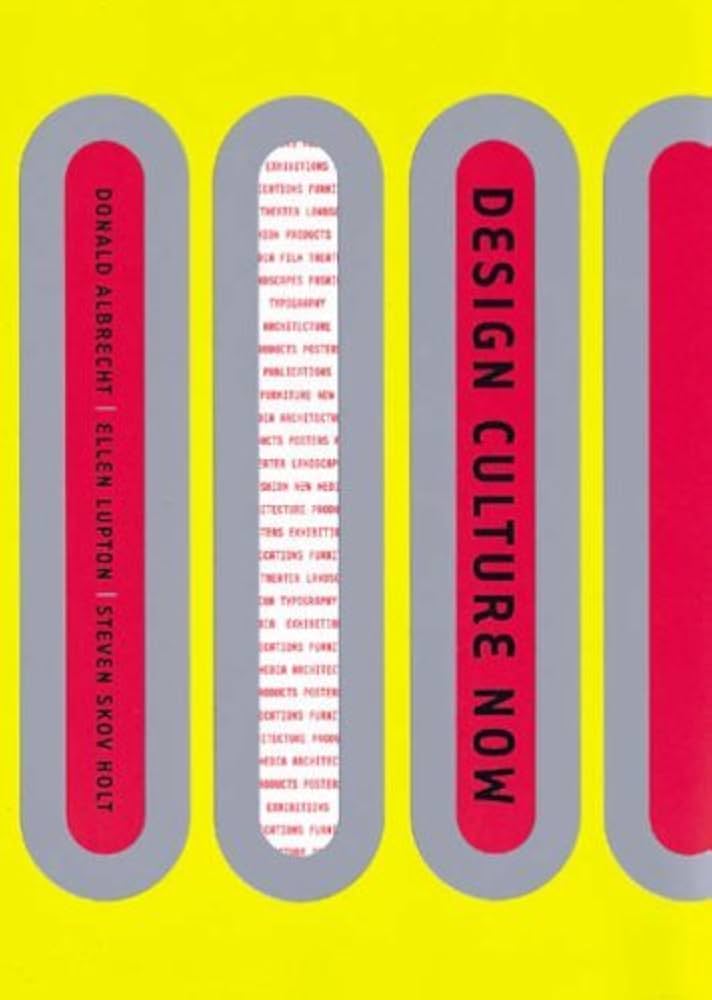 By Ellen Lupton and Donald Albrecht (2000)
This is the first-ever survey of American design that cuts across the four disciplines of architecture, product design, graphic design, and new media. Put together by the National Design Museum surveys the up-to-the-minute trends in American design from architecture to product and graphic design to new media. This comprehensive survey catalogs the best in architecture, interiors, environments, landscapes, products, furniture, fashion, objects, typefaces, posters, publications, film and TV graphics, and interactive media from the last three years.
Posted in architecture, art, culture, design, exhibition, media, technology, typography
Being & Time: The Emergence of Video Projection
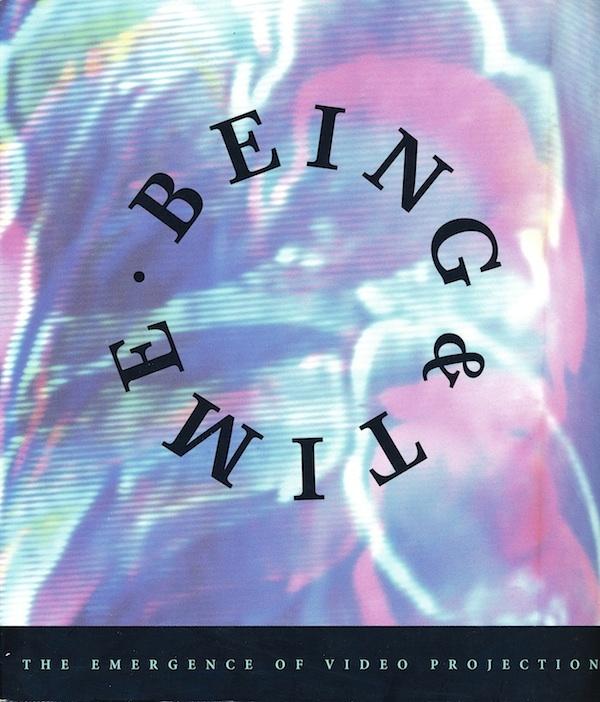 Marc Mayer (1996)
One of the first catalogues to examine seriously the growing use of video in contemporary art practice. It features the work of established masters of the field such as Gary Hill, Bruce Nauman and Bill Viola as well as Diana Thater and Willie Doherty.
Posted in art, cinema, exhibition, history, media, technology
Martin Heidegger: Basic Writings
 Martin Heidegger
Heidegger’s most popular collection of essential writings, now revised and expanded — includes the 10 key essays plus the introduction to Being and Time.
Posted in art, consciousness, language, philosophy
Telematic Embrace: Visionary Theories of Art, Technology, and Consciousness by Roy Ascott
 Edited by Edward Shanken (2003)
Long before e-mail and the Internet permeated society, Roy Ascott, a pioneering British artist and theorist, coined the term “telematic art” to describe the use of online computer networks as an artistic medium. In Telematic Embrace Edward A. Shanken gathers, for the first time, an impressive compilation of more than three decades of Ascott’s philosophies on aesthetics, interactivity, and the sense of self and community in the telematic world of cyberspace. This book explores Ascott’s ideas on how networked communication has shaped behavior and consciousness within and beyond the realm of what is conventionally defined as art.
Posted in art, consciousness, education, media, science, technology, theory
Lipstick Traces: A Secret History of the 20th Century
 Greil Marcus (1989)
Acclaimed rock reviewer/author Marcus offers up a fascinating thesis: that modern consciousness is to a great extent shaped by events or documents “insignificant” of themselves but collectively very important indeed, perhaps even definitive. While spending much of its time on the impact of the Sex Pistols, this is not purely a “rock-music” book–along the way one encounters various ranters, Dadaists, nihilists, whatever–even Theodore Dreiser. If it lacks the rigor demanded of academic historiography, Marcus’s book is still great popular culture, and academic historians would do well to be interested. Meanwhile, the cross-referential treatment gives a seeming (at least) validity that sheer facts wouldn’t to the idea of a “secret history” that permeates unobtrusively and yields more meaning than many would like to believe.