
Category Archives: art
The Originality of the Avant-Garde and Other Modernist Myths
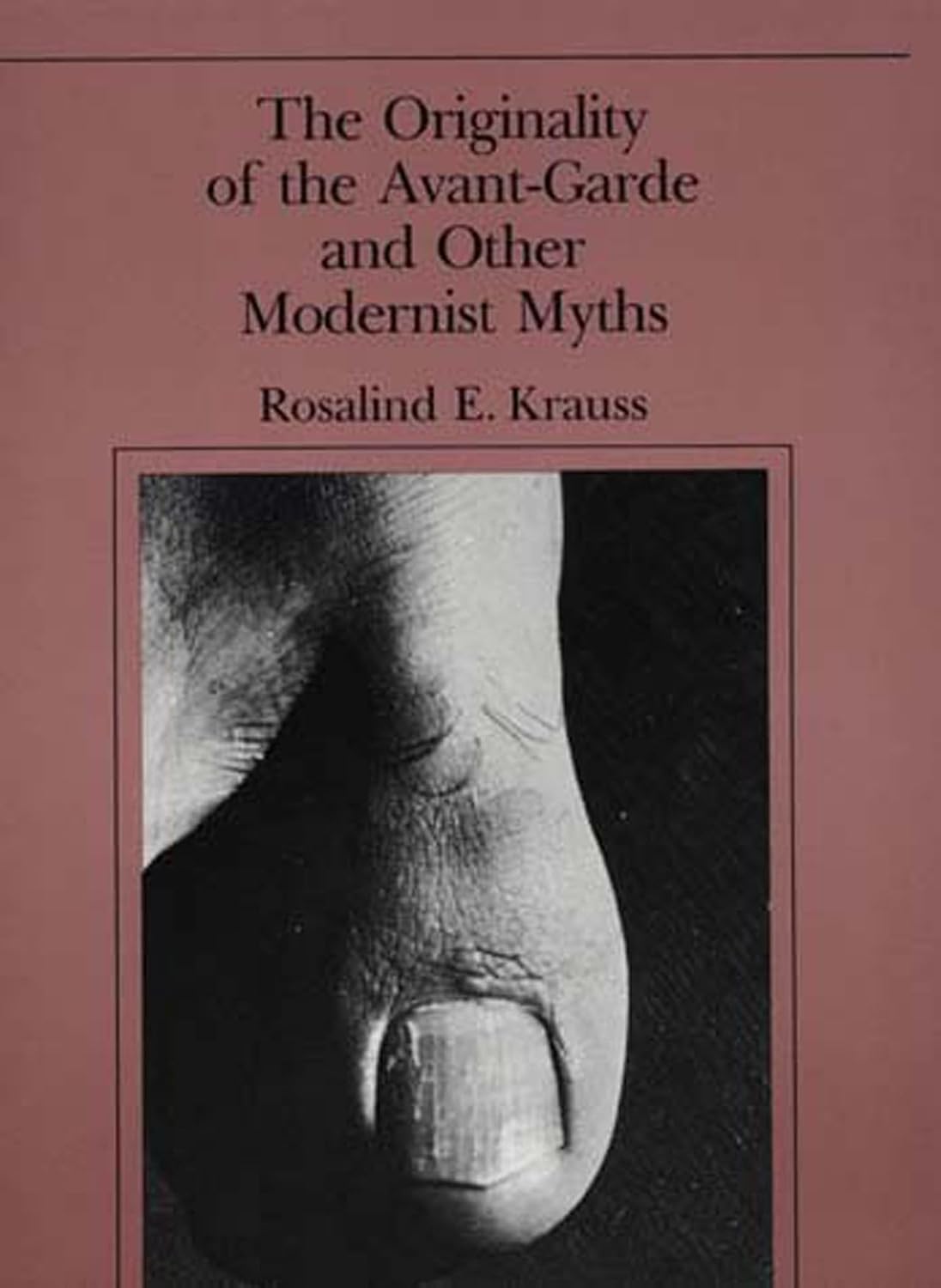 Rosalind Krauss (1985)
In this challenging collection of fifteen essays, most of which originally appeared in October, Krauss explores the ways in which the break in style that produced postmodernism has forced a change in our various understandings of twentieth-century art, beginning with the almost mythic idea of the avant-garde. Krauss uses the analytical tools of semiology, structuralism, and poststructuralism to reveal new meanings in the visual arts and to critique the way other prominent practitioners of art and literary history write about art. In two sections, “Modernist Myths” and “Toward Postmodernism,” her essays range from the problem of the grid in painting and the unity of Giacometti’s sculpture to the works of Jackson Pollock, Sol Lewitt, and Richard Serra, and observations about major trends in contemporary literary criticism.
Joseph Beuys in America: Energy Plan for the Western Man
 Joseph Beuys (1993)
Joseph Beuys, artist and scholar, was the most influential thinker among artists of the postwar generation. He inspired the avant-garde with his impassioned appeals for democratic anarchy, and actually founded a string of ‘free universities’ across Europe. His credo was “Every man is an artist.” In 1974, he accepted an invitation to visit the U.S. His travels too him to New York, Chicago, and Minneapolis, and he called the trip – fact an extended performance piece – “Energy Plan for the Western Man.” Beuys’ writings have never before been collected in any language, and most of the interviews and speeches in Joseph Beuys in America have never before appeared in book form.
Obey the Giant: Life in the Image World
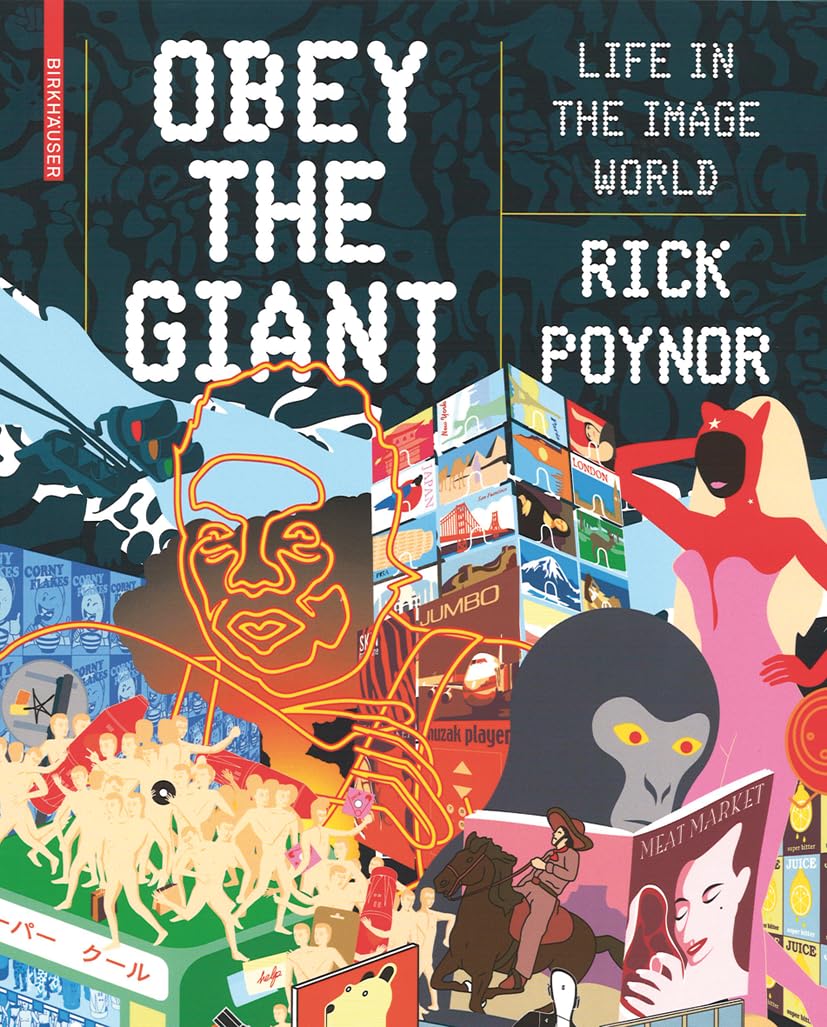 Rick Poyner (2001)
Design critic Rick Poynor explores the thinking behind contemporary visual culture – intriguing and fascinating appraisal. In the twenty-first century, commerce and culture are ever more closely entwined. This new collection of essays by design critic Rick Poynor takes a searching look at visual culture to discover the reality beneath the ultra-seductive surfaces. Poynor explores the thinking behind the emerging resistance to commercial rhetoric among designers, and offers critical insights into the changing dialogue between advertising and design. Other essays address the topics of visual journalism; brands as religion; the new solipsism; graphic memes; the pleasures of imperfect design; and the poverty of “cool”. Around the world, many are now waking up to the dominance of huge corporations – invariably expressed by visual means. This pointed and provocative counterblast arrives at a moment when critical responses are vital if this mono-culture is to be challenged. It offers inspirational evidence of alternative ways of engaging with design, and it will appeal to any reader with a questioning interest in design, advertising, cultural studies, media studies, and the visual arts.
Yes Yes Y’All: An Oral History of Hip-Hop’s First Decade
 Edited by Jim Fricke and Charlie Ahearn (2002)
Based on the “Hip-Hop Nation” exhibit at Seattle’s Experience Music Project and the project’s ongoing Oral History Program, this history of the beginnings of hip-hop in 1970s New York City is a lavishly illustrated and lovingly compiled homage to the many artists who contributed to the birth of what soon became and remains today, more than 25 years later a worldwide cultural institution. Editors Fricke and Ahearn (director of the hip-hop film Wild Style) weave the insights and attitudes of nearly 100 of the key players into a multihued and multiracial tapestry that illustrates what the excitement of that era and its music was all about. Since the hip-hop style was first developed in the Bronx borough of New York City as a dance-floor alternative to the then-prominent “disco” sound, the oral narrative is dominated by the voices of well-known DJs: Kool Herc, Afrika Bambaataa and Grandmaster Flash. But much of the success of the book is derived from its exploration of the roots of other related hip-hop trends: how the massive new styles of graffiti were both a response to urban violence as well as a way to provoke the interest of downtown New York avant-garde artists; how the competitive world of break dancing was rooted in the rapidly changing and fading gang culture of the Bronx; and how many women were far more active and influential in all types of hip-hop styles than was obvious or recognized at the time. This is an excellent documentation of how early hip-hop expressed “a balance between pain and the celebration of music and movements.”
Mixed Blessings: New Art in a Multicultural America
 Lucy Lippard (1990)
In America today there is a little-known explosion of creative art by women and men from many different ethnic backgrounds. Mixed Blessings is the first book to discuss the crosscultural process taking place in the work of Latino, Native-, African-, and Asian-American artists. Rich with illustrations of artworks in many different mediums, and filled with incisive quotes and unsettling reports, it is more than a book about art, it is a complex meditation on the relationships of people to their cultures.
Saarinen House and Garden: A Total Work of Art
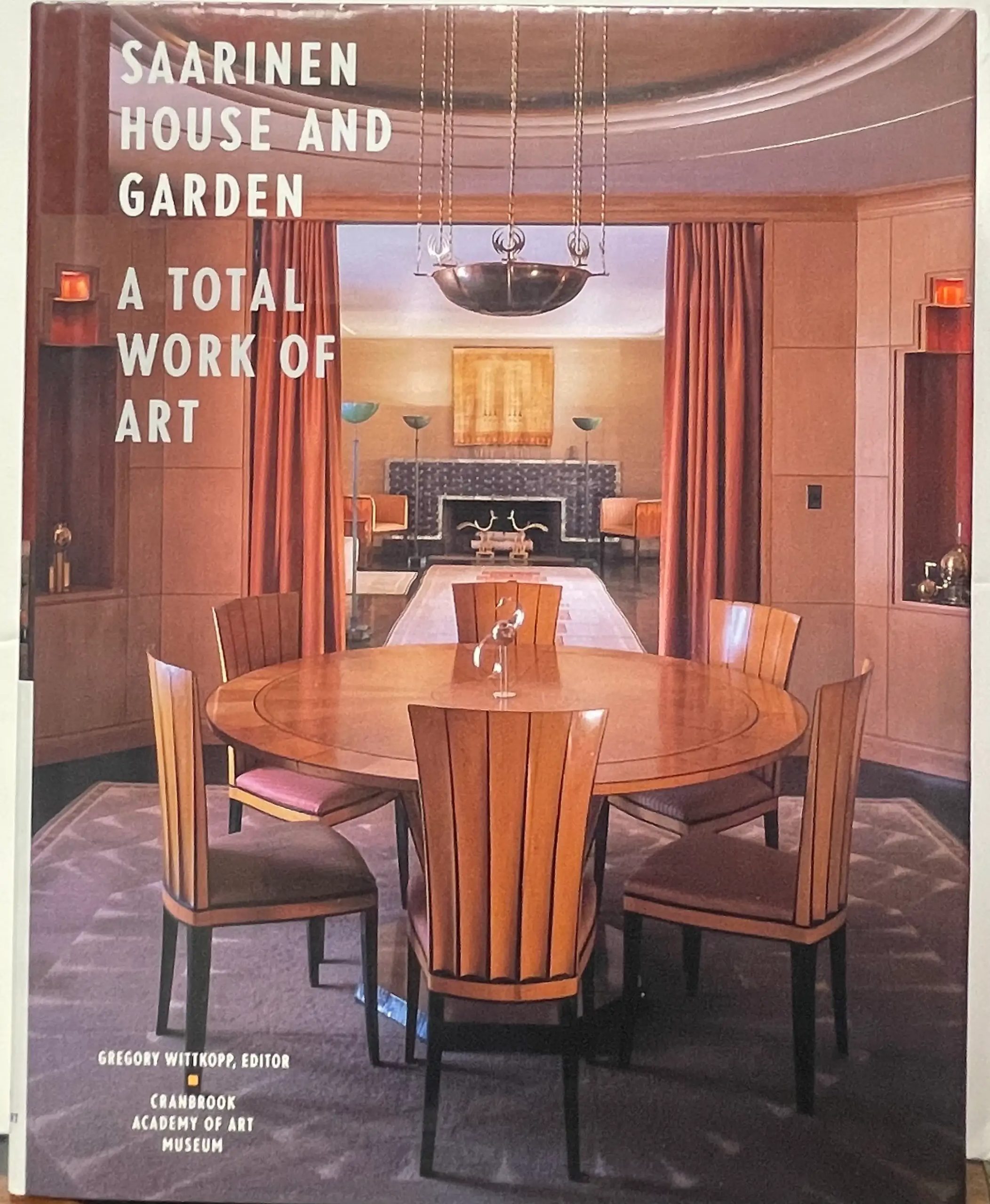 Edited by Gregory Wittkopp and Diana Balmori (1995)
Certainly one of the most overlooked works of modern architecture, the Saarinen house, which this book documents in splendid detail, is perhaps the crowning work of Finnish architect Eliel Saarinen during his years at Cranbrook. Thanks to the recent restoration of the house and garden, we can now see his vision of TOTAL design; from the flatware to the tapestries to the furniture to the door handle to the landscape.
Posted in architecture, art, Cranbrook, design, history
The Print in the Western World: An Introductory History
 Linda Hults (1996)
While teaching the history of the print, Hults felt constrained by the lack of a scholarly chronological introduction to the matter. Her solution: the creation of this well-organized, exhaustively researched volume, which may well become a bible in its field. Her subject isn’t limited to technical aspects of printed media (woodcuts, etching, engraving, drypoint, aqua- and mezzotints, lithographs, silk-screens, etc.). She also examines the cultural and economic forces behind each medium as it developed, the personal goals of individual artists and cultural events influencing their times. From Christian souvenirs at early pilgrim sites to Communist agitprop; from prints made for renaissance patrons to mass editions marketed to the middle and lower classes of the industrial age, Hults treats (and illustrates) them all. The book is meticulously annotated and indexed and incorporates commentary from other art historians. Female artists and writers are also given their due. Beyond the overwhelming scholarship, this is a work to be read. Hults’s prose has a clarity, rhythm and range of shading that complement the prints she describes.
Posted in art, history, media, printmaking
Cranbrook Design: The New Discourse
 Katherine and Michael McCoy (1990)
A book that documents Cranbrook’s Design Department faculty, student, and alumni work from 1980-1990. Although not defined by a style, the Cranbrook design philosophy has been influential in product, graphic and furniture design. Products have been treated as sensual objects to be interpreted. “We’ve tried to recognize that products carry the mythology of the culture,” said Michael McCoy, chairman of the design department with his wife, Katherine.
Design in America: The Cranbrook Vision, 1925-1950
 Edited by Robert Clark and Andrea Belloli (1984)
As Neil Harris explains in one of the book’s most interesting essays, Cranbrook derived from the arts and crafts movement that started in mid- 19th-century England as a reaction against shoddy industrial output and that, spreading speedily through northern Europe, resulted in the foundation of several schools aimed at reforming design by relating it more to art and life.
The Cranbrook complex, consisting of a church, schools for children, residences, studios and workshops, took about nine years to complete, by which time it had become – not an art school, but, in the words of the architect Eliel Saarinen, ”a working place for creative arts.” The emphasis, says Robert Judson Clark in his essay, was more on ”place, people and experience than on curriculum and methods.” Still, during World War II, this shifted to more orthodox concerns – credits, degrees and specific courses in, for instance, industrial design.
The influence of the Saarinens diminishes as the first generation of Cranbrook students comes of age, in the 1940s. The students include Ray and Charles Eames, represented by architecture and furniture; Florence Knoll, with interiors, and Harry Bertoia, with welded-metal sculptures.
Whereishere
 Scott and Laurie Makela (1998)
What is driving communication and what are the real challenges facing designers today? Whereishere presents a radical new take on both these issues, breaks from the orthodox approach to understanding two dimensional design. Leading graphic design studios are represented including Bruce Mau and Cranbrook Academy of Art.
Posted in art, Cranbrook, design, education, media, photography, typography