
Category Archives: art
Sexual Politics
Version 1.0.0Edited by Amelia Jones (1996)
Completing a trilogy begun with Chicago’s Beyond the Flower and The Dinner Party, this volume is the actual catalog of the reappearance of Chicago’s peripatetic icon of feminist art. But “The Dinner Party” is only one of about 100 other feminist artworks, created by 55 women artists, that were put on display at the Armand Hammar Museum to bring 1970s feminist art into perspective.
Posted in art, exhibition, history, theory
Meditations On a Hobby Horse and Other Essays On the Theory of Art
 E.H. Gombrich (1963)
Prompted by modern critical discussions, the fourteen papers, lectures and articles assembled in this volume revolve around issues raised by twentieth-century art and theory. Taking abstraction and expression as his main themes, Professor Gombrich’s essays encompass the whole of the history of art, and include major articles on the social history of art, visual metaphor, tradition and expression, and psychoanalysis.
Art Subjects
 Howard Singerman (1999)
Nearly every artist under the age of fifty in the United States today has a Master of Fine Arts degree. Howard Singerman’s thoughtful study is the first to place that degree in its proper historical framework and ideological context. Arguing that where artists are trained makes a difference in the forms and meanings they produce, he shows how the university, with its disciplined organization of knowledge and demand for language, played a critical role in the production of modernism in the visual arts. Now it is shaping what we call postmodernism: like postmodernist art, the graduate university stresses theory and research over manual skills and traditional techniques of representation.
Singerman, who holds an M.F.A. in sculpture as well as a Ph.D. in Visual and Cultural Studies, is interested in the question of the artist as a “professional” and what that word means for and about the fashioning of artists. He begins by examining the first campus-based art schools in the 1870s and goes on to consider the structuring role of women art educators and women students; the shift from the “fine arts” to the “visual arts”; the fundamental grammar of art laid down in the schoolroom; and the development of professional art training in the American university. Singerman’s book reveals the ways we have conceived of art in the past hundred years and have institutionalized that conception as atelier activity, as craft, and finally as theory and performance.
Overlay
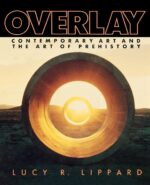 Lucy Lippard (1983)
Overlay is Lucy Lippard’s classic book on contemporary art and its connection to prehistoric sites and symbols. Viewed by critics, artists, art historians, and students as the essential text on how prehistoric images have been “overlayed” onto contemporary art by today’s artists, Overlay is for anyone interested in the possibility of reintegrating art into the fabric of society as a whole, as in prehistoric times.
Imagining Language
Version 1.0.0Edited by Jed Rasula and Steve McCaffery (1998)
When works such as Finnegans Wake and Tender Buttons were first introduced, they went so far beyond prevailing linguistic standards that they were widely considered “unreadable,” if not scandalous. Jed Rasula and Steve McCaffery take these and other examples of twentieth-century avant-garde writing as the starting point for a collection of writings that demonstrates a continuum of creative conjecture on language from antiquity to the present. The result is more laboratory than inventory. The anthology, which spans three millennia, generally bypasses chronology in order to illuminate unexpected congruities between seemingly discordant materials. Thus the juxtaposition of Marcel Duchamp and Jonathan Swift, of Victor Hugo and Easter Island “rongo rongo.”
Prints and Visual Communication
 William Ivins (1969)
The sophistication of the photographic process has had two dramatic results–freeing the artist from the confines of journalistic reproductions and freeing the scientist from the unavoidable imprecision of the artist’s prints. So released, both have prospered and produced their impressive nineteenth- and twentieth-century outputs. It is this premise that William M. Ivins, Jr., elaborates in Prints and Visual Communication, a history of printmaking from the crudest wood block, through engraving and lithography, to Talbot’s discovery of the negative-positive photographic process and its far reaching consequences.
Posted in art, history, media, photography, printmaking, technology
Juniper Fuse: Upper Paleolithic Imagination and the Construction of the Underworld
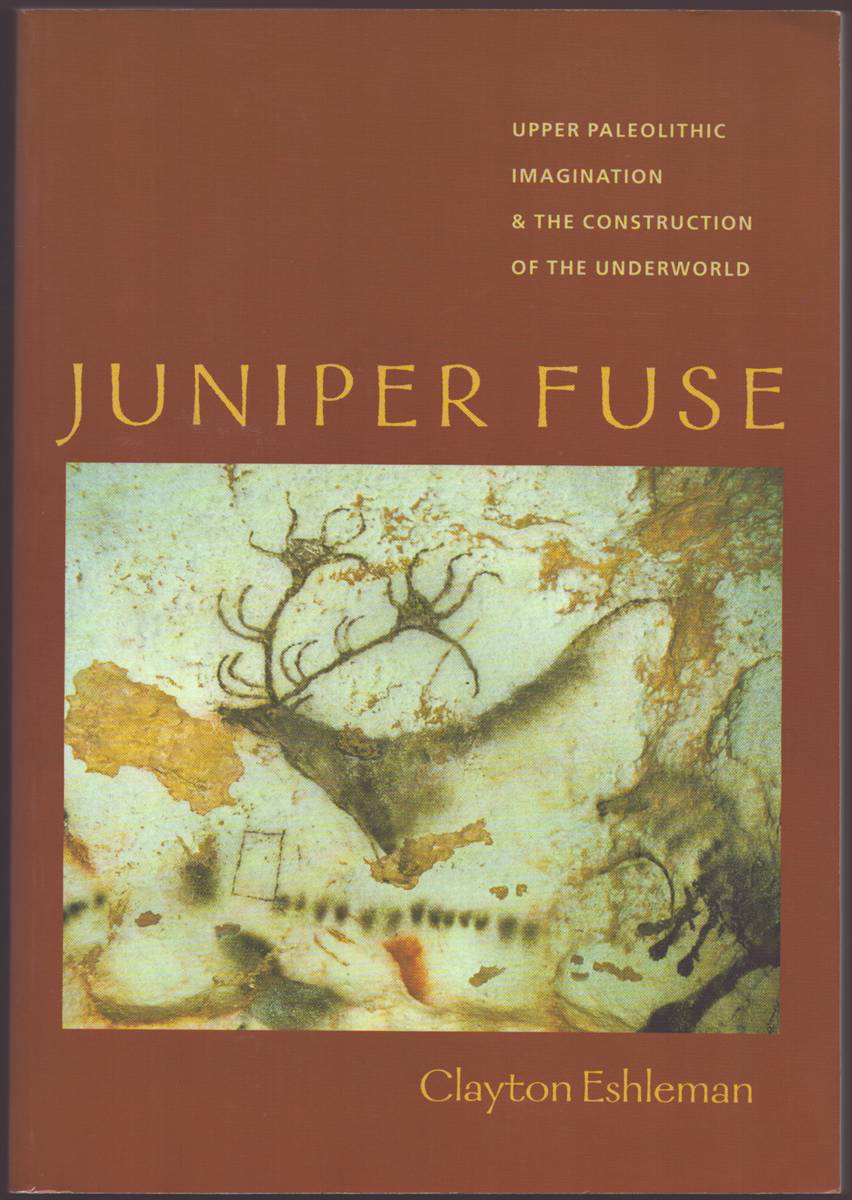 Clayton Eshleman (2003)
This arresting diptych of verse and philosophical prose charts a twenty-five-year obsession with the prehistoric cave paintings of southwestern France. The region’s enigmatic art work, dating from the Upper Paleolithic era, has been a constant muse for Eshleman, whose wildly discursive style mirrors the superimposed scenes of animal herds and shamanistic figures that populate the cave walls. Breathless accounts of cave exploration appear in counterpoint with poems in eerily primordial voices. Although his thesis that all art results from the separation anxiety between human and animal is unpersuasive, there is an impressive exuberance to his efforts to trace back to this common source everything from Greek myth to Allen Ginsberg. For Eshleman, it seems, the artist’s imaginative predicament is something of a cave itself, both maze and refuge.
Posted in art, consciousness, history, philosophy, poetry
The New Media Reader
 Edited by Noah Wardrip-Fruin and Nick Montfort (2003)
This reader collects the texts, videos, and computer programs–many of them now almost impossible to find–that chronicle the history and form the foundation of the still-emerging field of new media. General introductions by Janet Murray and Lev Manovich, along with short introductions to each of the texts, place the works in their historical context and explain their significance. The texts were originally published between World War II–when digital computing, cybernetic feedback, and early notions of hypertext and the Internet first appeared–and the emergence of the World Wide Web–when they entered the mainstream of public life.
Posted in art, history, media, philosophy, science, technology, theory
Snap to Grid: A User’s Guide to Digital Arts, Media, and Cultures
 Peter Lunenfeld (2000)
In Snap to Grid, an idiosyncratic guide to the interactive, telematic era, Peter Lunenfeld maps out the trajectories that digital technologies have traced upon our cultural imaginary. His clear-eyed evaluation of new media includes an impassioned discussion–informed by the discourses of technology, aesthetics, and cultural theory–of the digital artists, designers, and makers who matter most. “Snap to grid” is a command that instructs the computer to take hand-drawn lines and plot them precisely in Cartesian space. Users regularly disable this function the moment they open an application because the gains in predictability and accuracy are balanced against the losses of ambiguity and expressiveness. Lunenfeld uses “snap to grid” as a metaphor for how we manipulate and think about the electronic culture that enfolds us. In this book he snaps his seduction by the machine to the grid of critical thinking.
Posted in art, culture, media, technology, theory
Multimedia: From Wagner to Virtual Reality
 Edited by Randall Packer and Ken Jordan (expanded edition, 2002)
Readers interested in the history of multimedia should be enthralled by this collection of hard-to-find essays. “Outline of the Artwork of the Future,” for instance, was first published in 1849, and its author was the great German composer Richard Wagner, who envisioned a new kind of stage drama that united music, visual effects, poetry, and dance. Skip forward seven decades, and here’s 1924’s “Theater, Circus, Variety,” by Laszlo Moholy-Nagy, one of the foremost practitioners of the Bauhaus school of art. His elaboration of Wagner’s ideas incorporated the revolutionary idea of removing the so-called fourth wall and involving the audience in the play. Similarly, these essays trace the evolution of electronic media, film, and books (William Burroughs’ 1964 piece, “The Future of the Novel,” is itself worth the price of admission). A remarkable blending of past and present, these essays remind us that today’s wondrous inventions didn’t just spring into existence out of nothingness.
Posted in art, history, media, philosophy, science, technology, theory